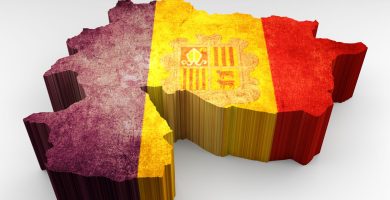
A country of its own, unique and special
The first human discoveries that are found in Andorra have around 12,000 years old. It's amazing! Some 120 centuries of history! Those first inhabitants would already see something extraordinary back then. But we are going to try to simplify this miraculous chronicle as much as possible and let's go to the year 843 AD where we already talk about Andorra, a valley in the middle of the Pyrenees. run by a count and a bishop. Andorra passes through Romanization, Christianization and Feudalism, and after resignations, agreements and sales of rights between crowns, counts and the Catholic Church we moved to two dates that mark the future of Andorra as a Sovereign State: September 8, 1278 and December 6, 1288. In these two moments two treaties are signed between the Bishop of Urgell and the Count of Foix in which Andorra is recognized like a State of Fact But these two gentlemen will share the right of jurisdiction, and the armed service of the Andorrans, and both will receive an agreed amount of money: the Bishop in even years and the Count of Foix in odd years.
This situation lasted until December 1288. moment when the second treaty was signed between the lords themselves and where some issues were resolved such as that none of them could build any fortification without the consent of the other, and that notaries had to be appointed by mutual agreement. These treaties are called "Els Pariatges"and the"Pariatge"Andorran is the most formal one known to date since it obtained a double approval, Royal and Papal, and also persists to this day.
With these agreements in reality what The Co-Principality of Andorra is created, considered by some scholars as the first contemporary Constitution. These events were possible thanks to different factors such as the geographical location of Andorra, between two different States such as France and Spain today, but also due to the way of acting of the Andorrans. There is a very significant expression in Andorra that says "play the Andorran", and while these gentlemen were fighting over the territory, the Andorrans always showed acceptance of any dispute, but meanwhile, they, the Andorrans, they were creating their own independence.
One of the oldest parliaments in Europe
Since the signing of these two treaties, the History of Andorra is marked for the interpretation that the Andorrans and the Lords of Andorra did. The reality is that after these agreements the Count of Foix lost interest in Andorra and over time the Bishop of Urgell gave up requiring the Andorrans to take the oath of fidelity. During this period the Andorran people took the opportunity to "play the Andorran"and little by little consolidate the political and institutional regime of Andorra that ended with the creation of different public administrations and the founding of the "Consell de la Terra"in the year 1419, moment in which the Bishop of Urgell and the Count of Foix grant the Andorrans the right to elect their representatives.
This parliament has been evolving and has remained until March 14, 1993 when Andorra creates its Constitution for which exercises its legislative power in a State of Law, Democratic and Social. The Parliament of Andorra had its headquarters in the House of the Valley until 2011. The Casa de la Vall was built at the end of the 16th century and was built as a noble house and defense tower. Currently the Casa de la Vall is the most symbolic monument in Andorra due to its transcendental role in the course of Andorra's history and is located in the historic center from the Capital of Andorra: Andorra la Vella. This is a must see, where you can easily locate the new Parliament of Andorra, and it is also an area full of bars and restaurants with a unique charm. You can visit the Casa de la Vall with prior reservation by calling (+376) 829 129 or sending an email to the address museusandorra@gmail.com